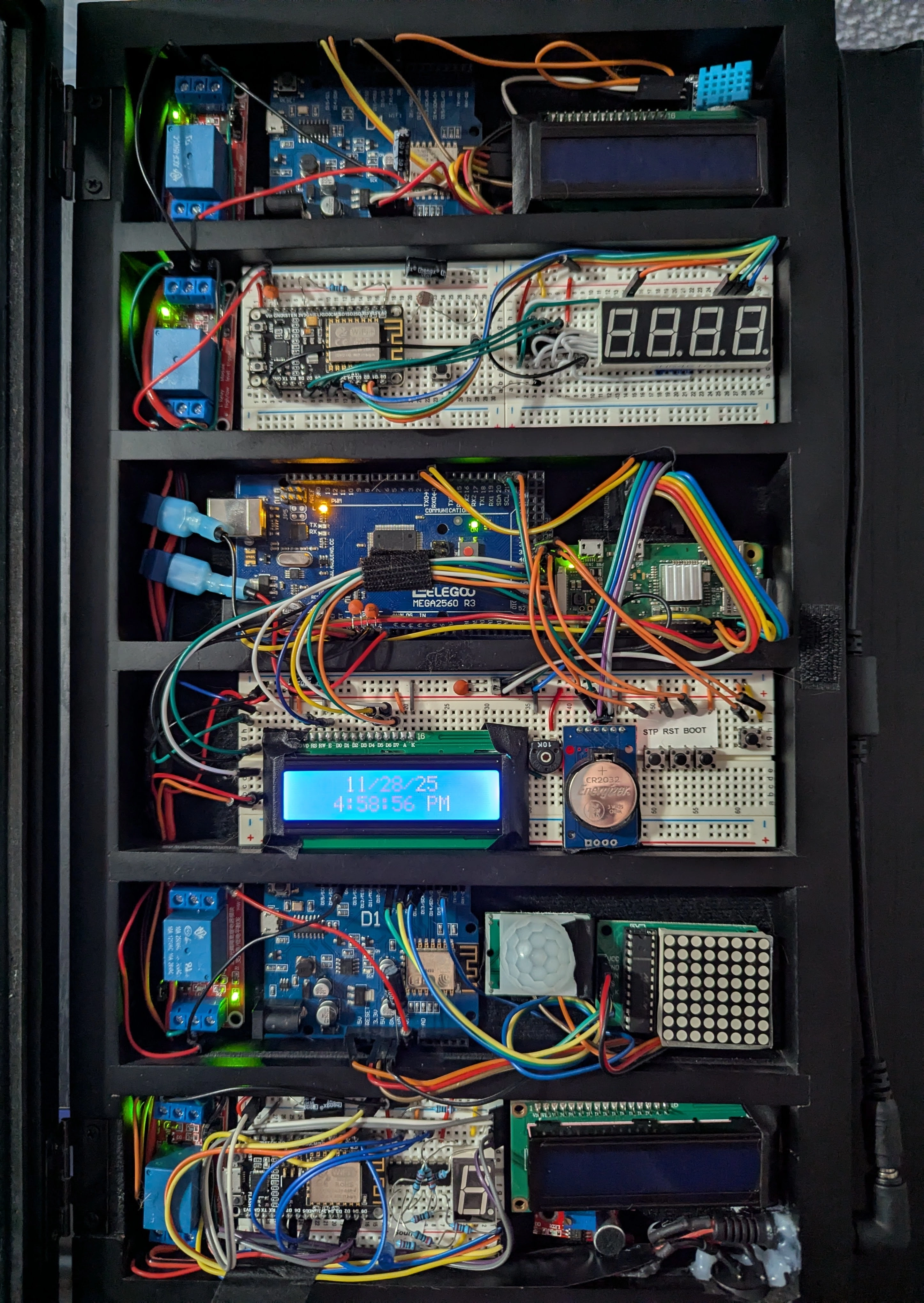
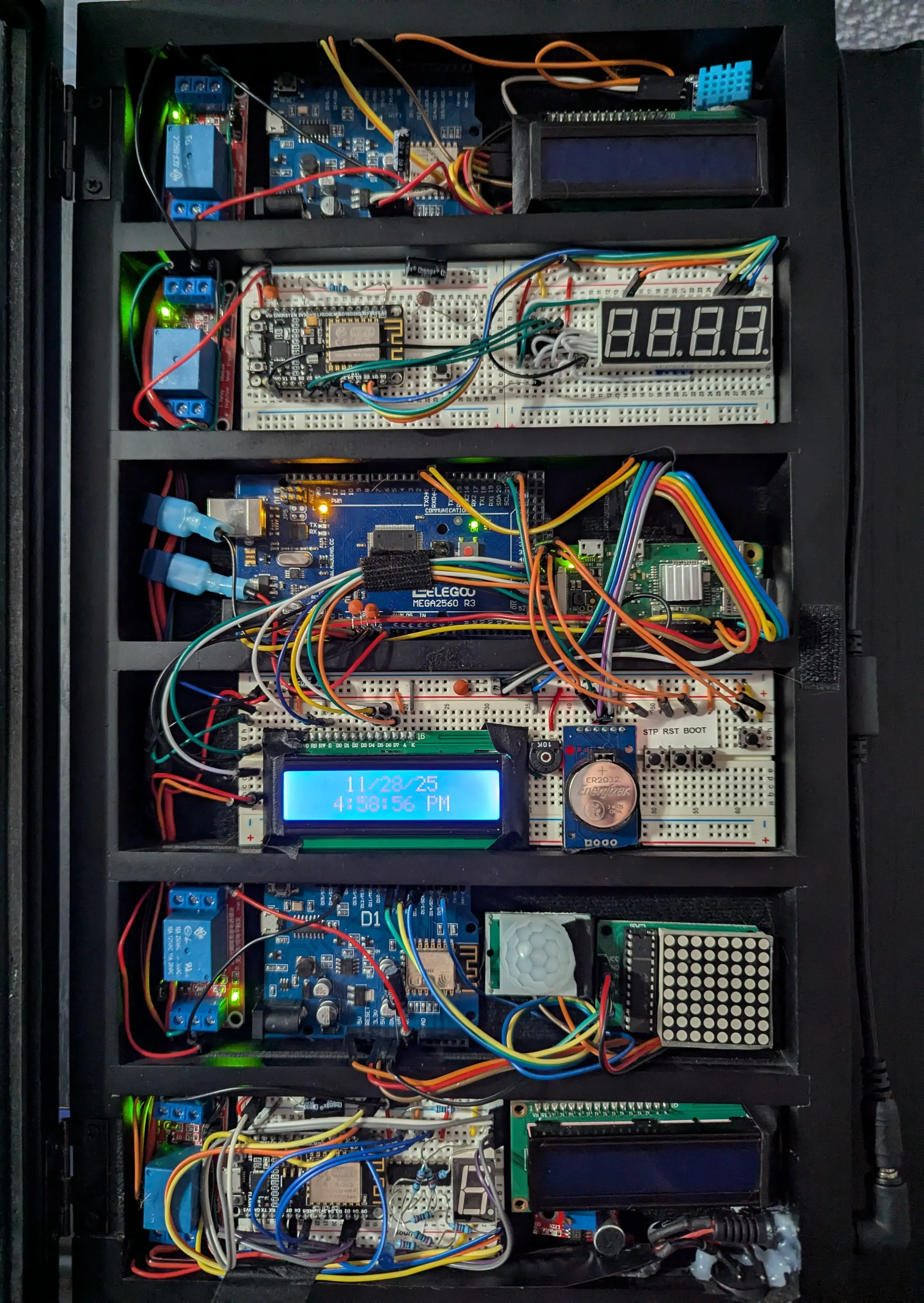
Arducase
11/28/2025
| Zone | Board | Devices | Task | Status |
|---|---|---|---|---|
| 1 | Wemos D1 Mini | Temp, LCD | Sense temp, display it, and sync to MQTT | Active |
| 2 | Wemos D1 Mini | 4-Digit Display | Display device statuses from MQTT | Active |
| 3 | MEGA 2560 | Power Relays, Tilt Alarm | Main power control and security | Active |
| 4 | Raspberry Pi 4 | UPS HAT, Node-RED | Manages OTA updates, MQTT, and control logic | Active |
| 5 | Wemos D1 Mini | LED Matrix | Display animations and alerts from MQTT | Active |
| 6 | Wemos D1 Mini | LCD, Sound Sensor | Sense Sound, display it, and sync to MQTT | Active |
The case is a modified military coin display case from Michael’s.
Blog Posts:
Status
The project is now largely complete. The original concept of a modular, Arduino-powered display is fully realized and has been significantly improved with a centralized control system and a robust firmware update process.
Architecture
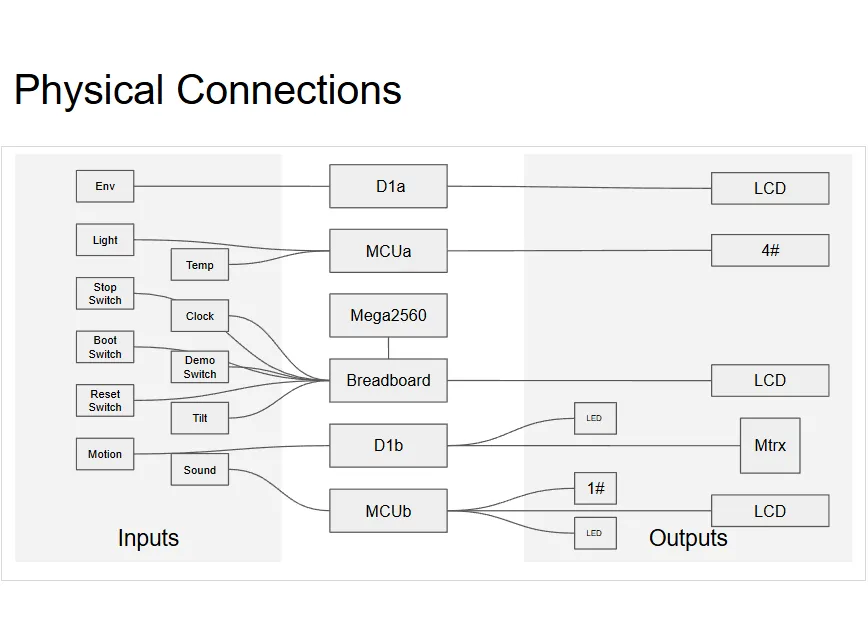
The Arducase has evolved into a client-server architecture.
- Clients: The five Arduino-based microcontrollers in their slots, responsible for sensor readings and display functions. They report their status and listen for commands via MQTT.
- Server: A Raspberry Pi running Node-RED. It serves three primary functions:
- MQTT Broker: Manages all communication between the modules.
- OTA Update Server: Hosts firmware binaries and a version manifest, allowing all modules to update themselves over the air with a simple “pull” request.
- Control Logic: Contains the logic for coordinating the behavior of all modules.
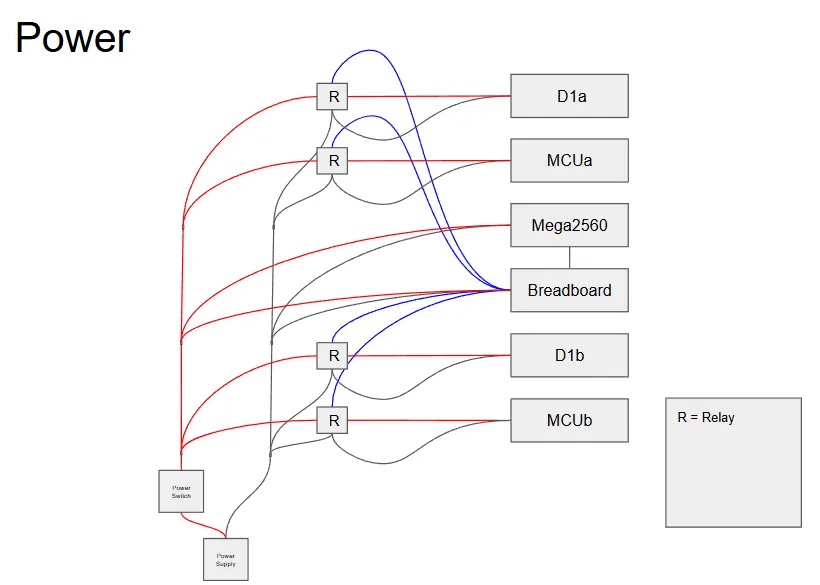
Power System
To improve stability and reliability, two major changes were implemented:
- Capacitor Filtering: Each module now has electrolytic and ceramic capacitors to smooth out voltage dips and filter electrical noise, preventing random resets.
- UPS Backup: The Raspberry Pi is equipped with a UPS (Uninterruptible Power Supply) HAT, ensuring it stays online and maintains control even if the main power is temporarily disconnected.
Drawings
← Back to projects